Unfortunately, research on women’s health is far behind and often this means women are left with little support or understanding about what they’re experiencing in their bodies. According to the American Association of Medical Colleges, “Before 1993, women were rarely included in clinical trials. Today, the medical field still doesn’t know how well many drugs and devices work for women.”

Many women are navigating hormone and reproductive related issues such as PMOS, Endometriosis, PMDD and more, without adequate holistic help.
In my personal experience, I have learned so much about self advocacy through living with hormonal issues. I trust that you can make your way through this murky medical world, just as I have.
Getting Started is the Hardest Part
It often starts with symptoms that leave you feeling miserable, followed by hours of researching what could be wrong. You might find a possible explanation, but suddenly you’re left with even more questions. Where do you start? Who can you trust? Who can help you look at and understand the bigger picture?
Finding the right provider to trust is arguably the hardest part of the journey. But please don’t give up. There are knowledgeable, compassionate providers who will help you navigate your health more holistically. You deserve that care.
I also recognize the cost is a very real barrier, and finding the right support isn’t always accessible. And here’s where things get even more frustrating: the very care that’s most accessible is the care that has left you with unanswered questions in the first place. There’s a much bigger conversation to be had about health insurance, the healthcare system, and what types of care are actually covered.
I could spend an entire post talking about that alone! But the reality is that more comprehensive, holistic approaches to health aren’t often covered by insurance, leaving people to pay out of pocket for the additional care they need. It can feel like you’re being asked to choose between the care you can afford and the care you feel you need.
But I keep coming back to something my mom used to say: “You can’t put a price on health.” You are worth the time, effort, and care it takes to feel better.
The medical system can sometimes leave you with more questions than answers. You may be offered solutions that address individual symptoms without fully exploring the bigger picture.
Getting Answers and Support isn’t Easy
You’re not always given the information you need to understand what a treatment actually does, how it works in your body, or what its potential benefits or limitations are. You can leave an appointment with a prescription but without a better understanding of your own health.
For many women, birth control is one of the first solutions offered. And while that may be the choice of some, it doesn’t address the underlying causes behind your symptoms. In some cases, it can feel more like putting a band-aid over the problem than actually learning about what’s happening.
Where is the opportunity to learn about your body, feel informed, and become an active participant in your care? What if you are focusing on fertility and trying to conceive? Birth control obviously isn’t going to address those goals. You may find yourself wondering what other options are available and why no one is helping you explore them.
You deserve to have your concerns taken seriously. You deserve to understand what’s happening in your body and to feel like the questions you’re asking actually matter. Don’t be afraid to keep asking questions, seek another option, or advocate for yourself when something doesn’t feel right. If there’s one message you take away from me, it’s this: trust yourself.
Being Heard by the Right Provider is Healing
Finding a provider who genuinely listens, takes your concerns seriously, and makes you feel supported can be just as meaningful as treatment itself. Sometimes, simply having someone acknowledge what you’ve been experiencing, validate your concerns, and help you make sense of what’s happening can change the entire experience.
You don’t have to feel dismissed, rushed, or like you need to convince someone that something is wrong. You deserve a provider who sees you as a whole person rather than a collection of symptoms or dismisses all your symptoms because you “should be healthy.”
If you don’t feel heard, speak up. Ask questions. Trust your gut. If something doesn’t feel right, it most likely is not right. You’re allowed to seek another opinion or decide a particular provider isn’t the right fit for you. Just because someone has a medical degree or professional credentials doesn’t mean you have to accept everything they say without question. This applies to all types of providers. Their expertise matters, but so does your experience of living in your body every day.
Connecting with the right provider is possible, but sometimes it means looking beyond the places you’ve traditionally gone for answers. Start by asking questions, connecting with people who may be on a similar path, and finding communities or individuals who share your interest in a more comprehensive approach to health. You never know where the right connection might come from.
For me, it started with finding a chiropractor who eventually referred me to an acupuncture physician. I’ve been seeing her for years now, and she has genuinely changed my life. Sometimes the support you’re looking for starts with just one person who takes you seriously. That one connection can open the door to so much more.
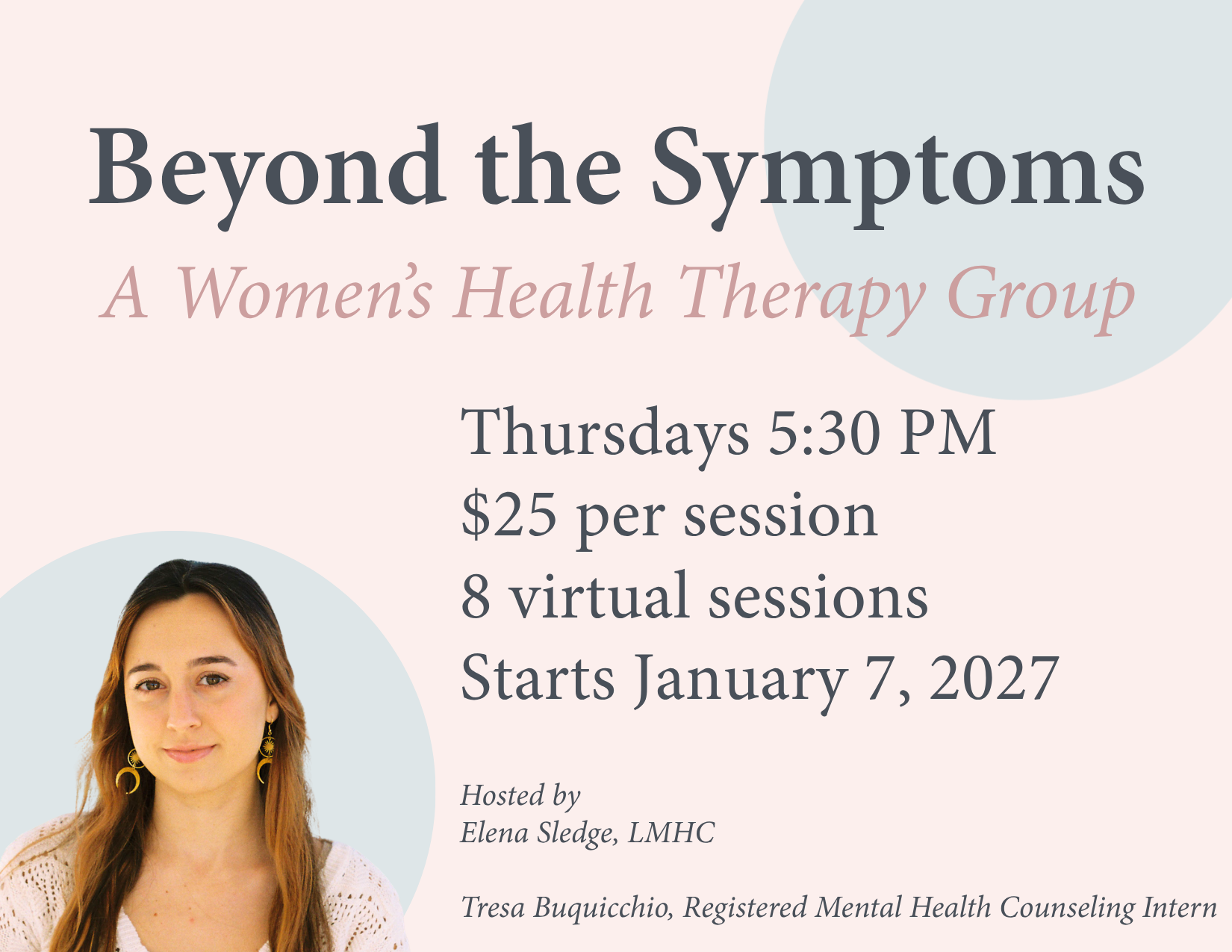
This group will help you:
Feel supported and heard by a community of women who understand
Learn to advocate for your needs in healthcare settings
Feel empowered to manage the ups and downs of your health journey
Practice mindfulness techniques to reduce stress and overwhelm
Understand and cope with grief, body image, infertility, a broken healthcare system and more
Email tresa@awakentherapyco.com to register
Doing EVERYTHING to Feel Better is Overwhelming
Navigating ongoing symptoms, uncertainty, and the search for answers can be exhausting. When we have been struggling through a problem for a while, especially without a clear explanation for what’s happening, it’s natural to go straight into problem-solving mode. You spend hours researching, looking into different treatments, trying new things, and searching for anything that might finally help.
In many ways, you end up trying to become your own doctor. And while it often comes from a place of wanting to feel better, the mental load of constantly searching, questioning, and trying to connect the dots can become exhausting itself.
But what are you supposed to do when you aren’t getting the answers you need or want? It’s easy to feel like you have no choice but to rely on your own resources, even when those resources feel limited. It can be utterly defeating.
When you’re desperate for answers or to improve how you feel, it’s easy to take on too many changes or solutions at once. Give yourself permission to slow down. You don’t have to figure everything out overnight or try every possible solution at the same time. The sooner you accept that this might be the longest endurance race of your life, the sooner you can begin giving yourself grace and meeting your body with compassion along the way.
Hormonal Issues Take a Mental and Emotional Toll
Hormonal health challenges aren’t just physical. They affect your mood, energy, relationships, sense of self, and overall quality of life. When your body isn’t functioning the way you want or expect it to, it can be incredibly emotionally draining.
Feeling at war with your own body is no small thing. It is exhausting to feel like your body is working against you, especially when you’re already trying too hard to find relief. And all of this is happening while life continues around you. You are still expected to show up for work, school, relationships, parenting, and all the other responsibilities that don’t simply disappear because you’re struggling.
On top of managing physical symptoms, you’re often carrying the stress of trying to figure out what’s happening, advocating for yourself, and navigating the uncertainty that comes with it all. That is a lot for one person to hold.
Our mental and physical health are deeply interconnected, and caring for your emotional well-being is an important part of caring for your overall health.
Having support, feeling understood, and knowing you’re not alone can make the process feel less overwhelming. And perhaps more importantly, this journey can also become an opportunity to reconnect with your body, in a way you never have before. You begin to listen to it, recognize what it is telling you, and learn to trust it. That is such a powerful lesson.